

How to sleep when you're feeling anxious
How to sleep when you're feeling anxious
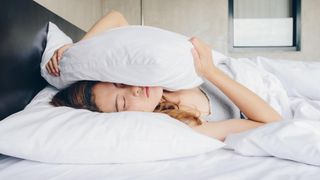
Trying to fall asleep (and stay asleep) when you're feeling anxious and stressed isn't piece of cake. Anxiety doesn't own an alert clock and it doesn't care that you're trying to get some close-center, which can brand some nights feel as though they'll never end. If your worries are keeping you awake, it'south time to take action. To help you, nosotros've teamed up with 2 experts to gain their communication on how to sleep with anxiety – and better still, how to keep your worries out of the bedroom.
Dr Audrey Tang is a chartered psychologist, mental health expert and author of The Leader's Guide to Resilience. Here she shares proven strategies to assistance you cope better and so that anxiety stops ruining your sleep. For advice on how to go on your worries out of the bedroom, we as well speak with Johanna Scheutzow, MSc in Organizational Psychiatry and Psychology, King'due south College London, and a psychologist for mental health app Thrive.
Some of what they share are simple steps you tin have tonight, while others may require more work and patience. It sounds bones, but making sure your bed is comfortable can also make a difference – take a look at our best mattress guide if your current mattress has seen amend days, and our best pillow round-up for comfier sleep.
For now, if your sleep is affected by anxiety, these are things you tin can exercise to gain some peace and larn how to sleep better again...
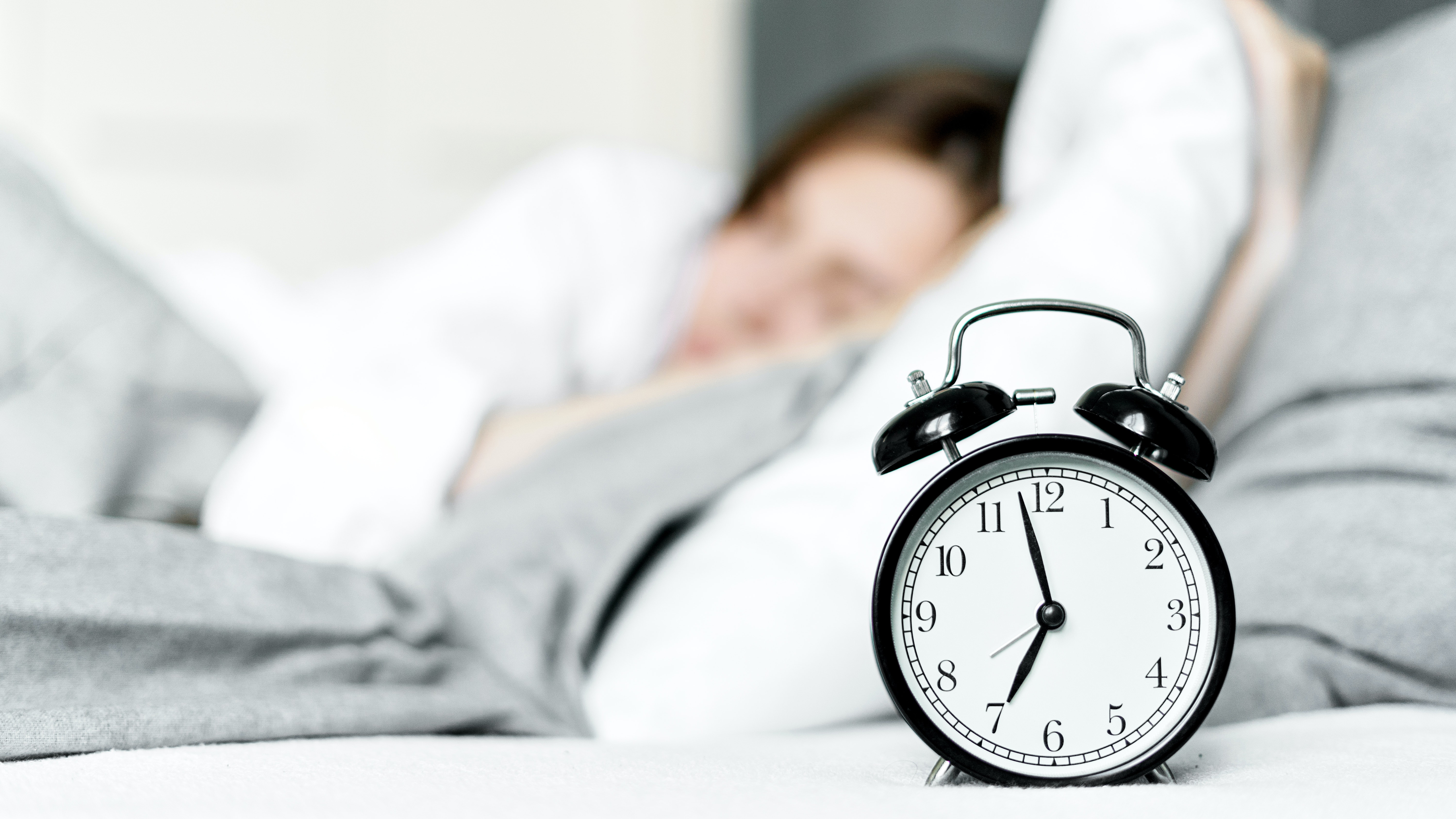
1. Create a bedtime routine
Nightly routines are just as important for adults as they are for children because they signal to your brain that it's time to relax for sleep. Routines get your trunk used to when it'south time to sleep and when information technology'south time to wake up. When thinking well-nigh what to do (or not do) as part of your nightly routine, Dr Tang recommends the following:
- Stop drinking caffeinated drinks about 6 hours before your bedtime
- Switch to camomile tea or warm h2o or milk instead
- Programme for the adjacent day by preparing your outfit and luncheon
- Have a bathroom, which tends to be more soothing than a shower
- Terminate scrolling through social media/your smartphone one hour before bedtime
- Go on a writing pad by your bed for if y'all wake in the middle of the night and need to recollect something – write it downwards (effort not to open your phone)
Other things you could do as office of a relaxing bedtime routine include:
- Reading
- Light stretching or gentle yoga
- Aromatherapy cocky-massage
- Meditation, including torso scans and sleep meditations
- Listen to a calming audiobook or music
- Go to bed at the same time every night to become your torso clock used to it
What if your nightly routine doesn't work? "If nothing helps, maybe getting upwards and repeating the pre-sleep routine can aid distract and create a new association betwixt sleep and your air current-down routine," suggests Johanna Scheutzow. "There's nothing worse than lying in bed, trying to wrestle with your worries." Get out of bed and distract yourself. When yous're feeling tired again, go back to bed.
- Learn how to sleep with a cold - a slumber doc advises
ii. Effort gentle exercise
"Sometimes people find exercising at nighttime helps," says Dr Tang. "Others don't, then heed your trunk'due south response to whatever yous try. Later exercising, a bath tends to exist more soothing than a shower (unless information technology feels 'too long' for you)."
The latest enquiry suggests that vigorous exercise (think interval training) should exist avoided one hour before bed because it can arrive more difficult for you lot to fall asleep. But more relaxing practice in the evening, such equally Tai Chi and gentle yoga, could help.
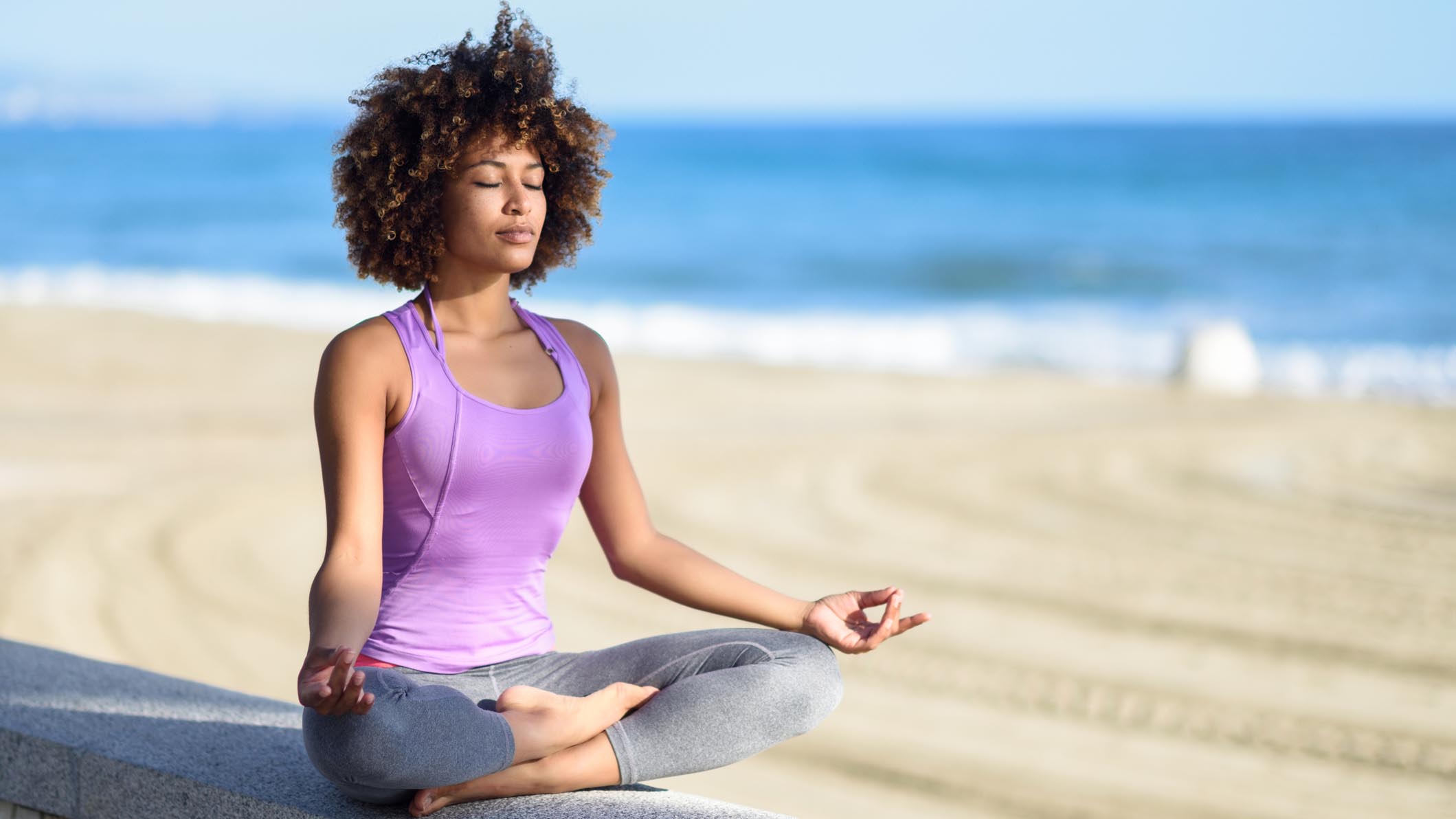
3. Employ deep breathing
When you're anxious, your breathing will be faster and more than shallow, which is the exact contrary of what you need to feel relaxed for sleep. Deep belly animate, on the other manus, helps you gain control over your bodily sensations, which in turn manages anxiety's heed-body connection a little better. And so focusing on deeper, slower breaths helps you relax for sleep.
Here Dr Tang recommends uncomplicated centered breathing and it's easy to do: "Breathing in for iv seconds, property for two seconds, and breathing out through the mouth for six seconds while listening to nature sounds, gentle music, or even a relaxation podcast tin be the final stride for a restful dark."
4. Continue your sleeping room dark
"On boilerplate, a person's circadian rhythm (body clock) naturally rises and falls in energy inside a 24 hour period," explains Dr Tang. "This responds well to low-cal, specially natural light. If information technology's dark our encephalon signals to release melatonin, which makes us sleepy.
"When it's light – especially if in that location'due south natural lite – melatonin stops. So if you wake upward with natural daylight exterior, it can be difficult to return to slumber again because your internal processes are already signaling that it'southward time for you to rising.
"Small things like making certain your sleeping room is well ventilated, night plenty and at a comfortable temperature will help."
five. Get clear on how much sleep yous need
Did you hear that ane about how every person needs eight hours of sleep a night? It's a myth, so don't panic if yous naturally experience better after six, vii or nine hours' sleep. "While enquiry would advise that on average adults need around seven to nine hours' sleep, children need more," Dr Tang says.
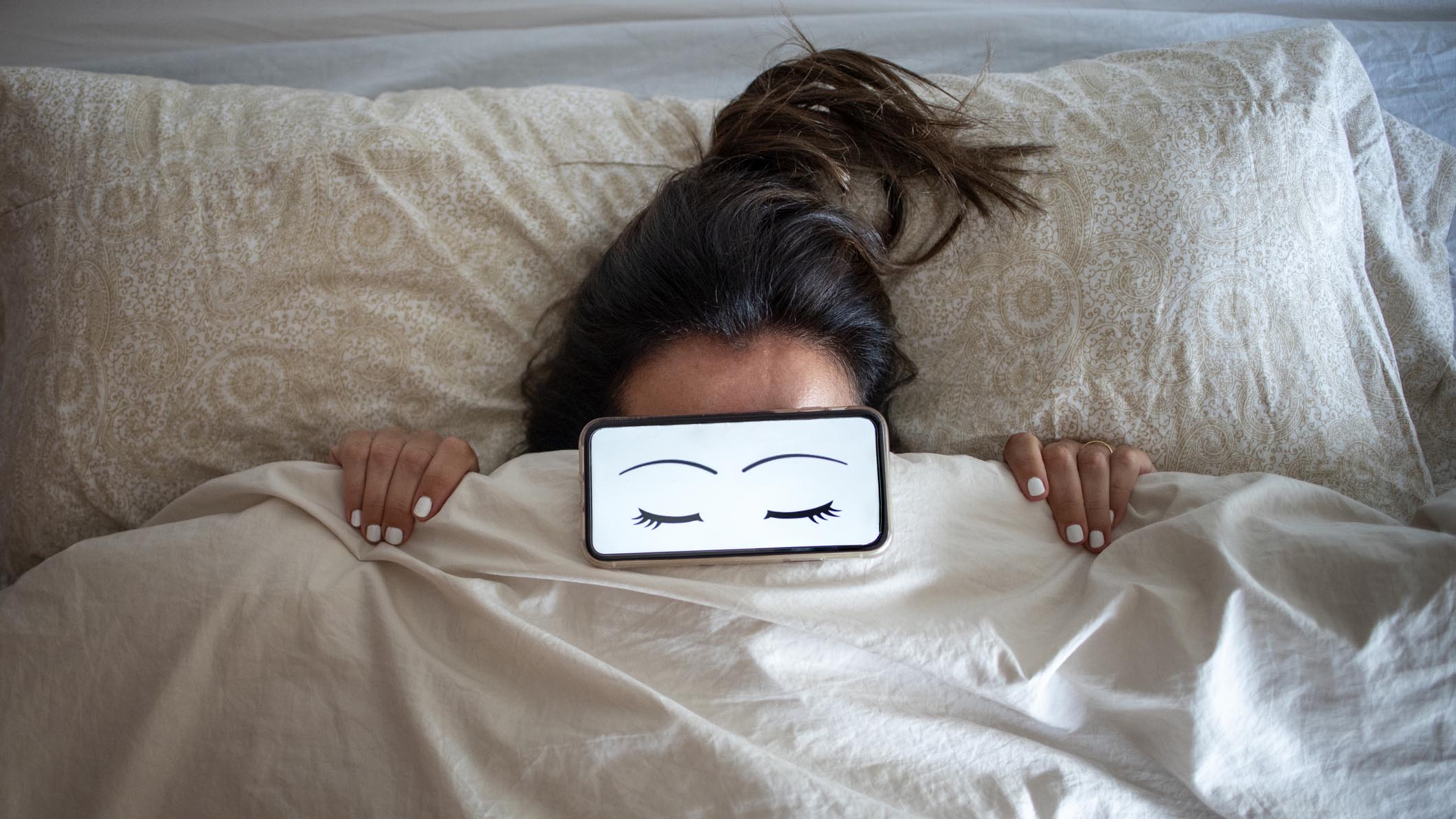
"As we age nosotros need less, and some people office very well on different patterns such every bit Biphasic Sleep: sleeping in 2 short periods and and then napping in the twenty-four hours. Power napping is besides benign for some. When it comes to slumber, I would always say try to go the number of hours that works for you."
To learn more about how much sleep you need, read our expert-led characteristic on how to fix your sleep schedule.
How does anxiety affect sleep and relaxation?
When you're broken-hearted and stressed, your brain thinks there's a threat (whether information technology's real or not), then your body prepares to react and your flight or fight response kicks in. That's when things get tricky for sleep.
"On perception of a threat, the amygdala (the office of the brain responsible for emotional processing) sends a 'distress' point to the hypothalamus, which in turn activates the Sympathetic Nervous System, resulting in epinephrine (adrenaline) being pumped into the system," Dr Tang explains.
Your middle beats faster, blood rushes to your vital organs, and your middle rate increases. Your lung capacity as well widens to take in more oxygen and once that reaches your encephalon, your senses become more acute.
Exercise and sleep
"Getting your blood pumping tin help clear your heed. Getting outside as well has huge benefits for mental health. Fresh air helps clear our lungs, and sunlight naturally stimulates the production of vitamin D which also assists our allowed system. Exercising in the sunday can help produce endorphins (the body's natural hurting relievers), serotonin (helps regulate slumber and appetite), and dopamine (the 'feel practiced' neurotransmitter).
"Later that initial surge subsides, the HPA axis (the hypothalamus, the pituitary gland and the adrenal glands) are activated and they recognize hormonal signals which tell them to continue in this state of high alacrity, which, if needed, is enabled through a release of cortisol," says Dr Tang. "If information technology isn't, the Parasympathetic Nervous Organization kicks in to dampen the stress response."
Has your center rate spiked just reading that? Well, imagine trying to sleep with that energy coursing through you. Our encephalon keeps u.s.a. safe and alive, simply to endeavour and slumber with all of this going on is pretty impossible. "Withal, we must call up that this is an evolutionary response, most effective at a fourth dimension when fighting or running were the appropriate responses to a threat.
"It is less effective at present when threats come in the shape of deadlines, relationships and overthinking, but that ways we demand to find ways of making it clear to our body and brain that nosotros are not in physical danger."
What do you if yous wake upward and tin can't get back to slumber
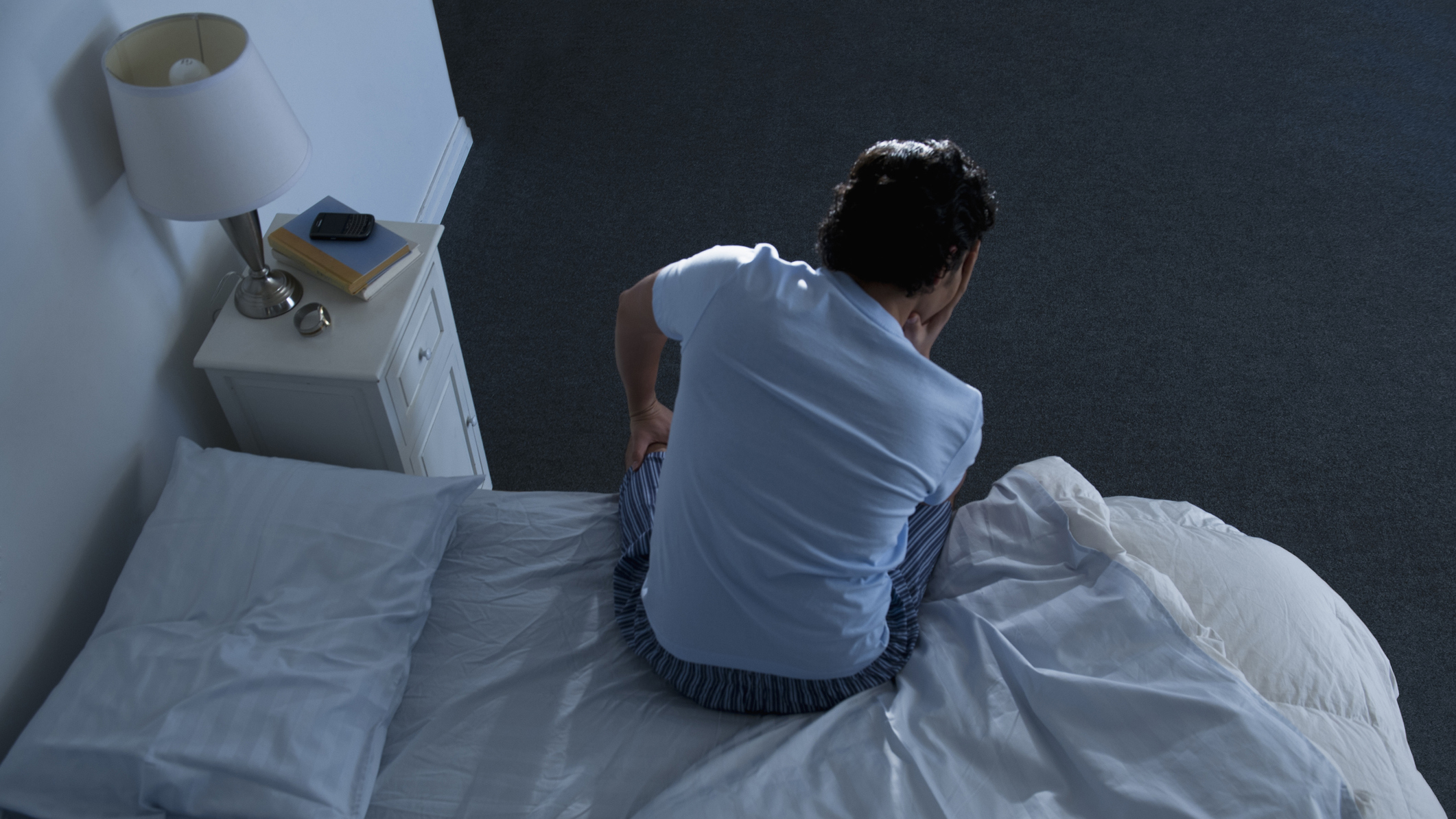
It's common to wake up during the dark, only some people wake so fleetingly they don't remember doing so. For others, they may wake up because they need to pee, after which they can easily get dorsum to sleep. But if you continue waking repeatedly in the nighttime and are unable to drift off again hands, you should speak to your physician.
Here's what to practise if you wake upward in the center of the night and can't become back to slumber...
1. Get out of bed
It'due south frustrating to proceed waking up in the middle of the night, simply lying there for a long time after waking, worrying about how you tin can't sleep, will only go far worse. "Become up and do something (ideally not on your phone or computer), such as reading a book. Information technology's best non to acquaintance your bedroom with the feelings of stress that yous cannot get to slumber."
If you think your bed has something to do with information technology, consider using one of the all-time mattress toppers to make your sleeping space more comfortable.
2. Consider altering your nap routine
Naps can be benign, just it depends when you're napping and for how long. "Research shows that a xx minute nap in the afternoon seems to provide more than residual than 20 minutes more than slumber in the morn" reveals Dr Tang. "Just this could also be because we may experience tired later a lunch as we digest our nutrient – and if that's the case – our bodies digest better when upright.
"That same inquiry would also suggest that if yous nap afterward 3pm, it may affect your sleep blueprint later on. If yous're noticing that a nap seems to result in waking more than often at dark, try meditation rather than a nap, which can be just every bit refreshing."
3. Deal with your worries in the daytime
"Unfortunately, sometimes waking up is a symptom of stress. If this is the case, it may continue until the stressor is removed," explains Dr Tang. "As difficult as it tin be, it may exist that you lot need to consider what actions yous can take to manage your state of affairs. In one case that has happened, restful sleep may render."
"To ensure better slumber, it's also helpful to schedule in 'worry time'," advises Scheutzow, "which could exist 15 minutes 2 times per twenty-four hours, well before bedtime." During this allocated fourth dimension you lot have gratis reign to worry about anything, but when writing them downward, commit to so doing 1 of three things: do something most your worries, delay them, or delete them.
Scheutzow explains: "Some worries can be solved and are urgent, so schedule time to solve them. Some worries are important simply don't need to be solved right away, so y'all can filibuster them. Some are non important, so you can delete them."
When should a person come across their doctor?

"It'southward really when yous begin to realize things aren't correct, or if y'all notice clusters of signs. This is where knowing your [stress] responses can be of use." To do this, Dr Tang suggests a body scan. "When you have a few moments to yourself, relax in a seated or lying down position. Working your style up or downward the torso, tense then relax your muscles (for case, your eyes, jaw, shoulders, hands, feet). This mode you can recognize the difference between your body in a tensed or relaxed country.
"Sometimes yous might be doing things like clenching your jaw or grinding your teeth without realizing. Knowing the departure between how your torso feels in alignment, and when it's uncomfortable, tin be another way to recognize your personal warning signs of stress."
For those of you who think that stress and burnout are things to ignore until they go away, Dr Tang has news for you: "Even if you're non at the point of diagnosis, view whatever negative emotions yous are experiencing equally a warning (like a petrol low-cal) that something needs to be washed.
"Fifty-fifty if yous do not wish to seek professional intervention withal, try to identify the root of your worries and address it if you can." Dr Tang also recommends trying a simple emotion meditation. To practice this, think nigh a time when you were:
- Happy
- Distressing
- Pleasantly surprised
- Fearful
- Feeling loved
- Angry
- Confident or successful (stop this on a positive emotion)
"As you reflect on those memories, run into if you can identify which part of your trunk you experience that emotion in. Some people may feel anxiety in their gut, others in their chest. Knowing which works for yous, like the body scan, tin help yous recognize when you lot might be needing extra back up.
"Think that change is hard, especially when information technology'southward a modify in habits of a lifetime. It might well be that a level of feet seems comfortable for y'all and it can take a lot of courage to recognize that information technology doesn't have to exist that way," says Dr Tang.
"One way to work to beat that rut now is to look at alter as having iii zones. The kickoff is the Comfort Zone (the identify where we spend the well-nigh time), the next is the Stretch Zone and the third is the Panic Zone. Neither our brain nor our torso wishes to get into the panic zone, merely stretching tin actually feel quite nice.
"Therefore, do something that pushes you a niggling into the stretch zone every 24-hour interval. When you lot go used to the stretch, you lot'll find that it becomes comfortable, and suddenly your quondam Panic Zone has moved to become the new Stretch Zone."
Dr Audrey Tang's book, The Leader's Guide to Resilience (Pearson) is available to purchase at present from Amazon .
Read more:
- The best memory cream mattresses for comfier sleep
- America'south best mattress in a box for all budgets
- Keep your bed fresh with the best mattress protectors

Source: https://www.tomsguide.com/how-to/how-to-sleep-with-anxiety
Posted by: riverashmed1979.blogspot.com
0 Response to "How to sleep when you're feeling anxious"
Post a Comment